Career & Work
Productivity Systems That Actually Stick
A productivity system that actually sticks is boring, recoverable, and built for tired days. Pretty dashboards are optional.
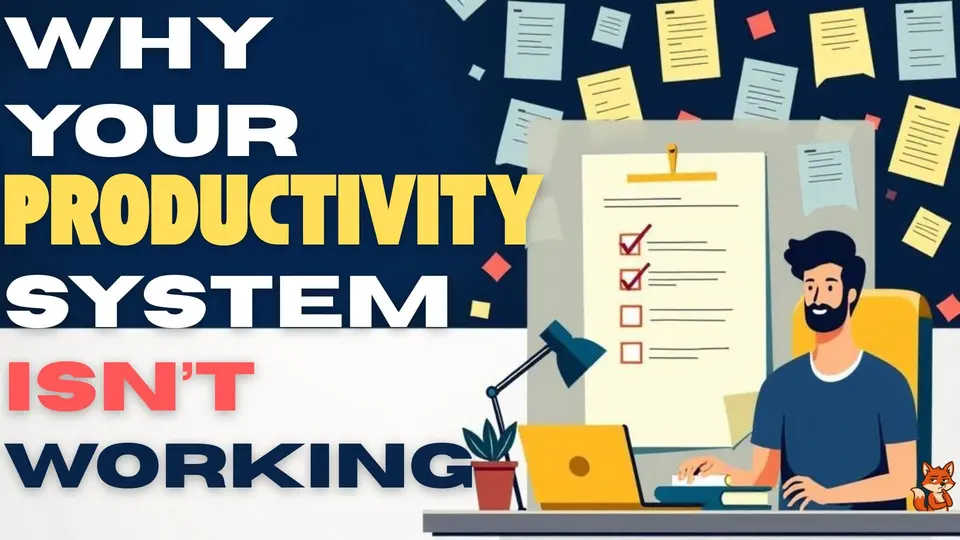
A productivity system that actually sticks is not impressive.
It is boring.
It catches your tasks.
It shows you what matters.
It survives a bad week without making you feel like you need to start a new life.
That is the bar.
Not aesthetic.
Not complicated.
Not a dashboard with seventeen status fields and a tiny shrine to your ideal self.
If your productivity system only works when you are calm, rested, and already organized, it is decoration.
Build one for the tired version of you.
The system needs three jobs
Ignore the productivity theater for a second.
Your system has three jobs:
- Capture: get tasks and ideas out of your head
- Choose: tell you what matters next
- Reset: help you recover when the week gets weird
That is it.
If a tool does not help one of those jobs, it is probably furniture.
Nice furniture maybe.
Still furniture.
Job 1: capture everything in one place
The move: Pick one inbox.
Not three.
One.
It can be Apple Notes, Google Keep, a notebook, Todoist, Notion, a plain text file, whatever.
The tool is less important than the rule:
If it is loose in your head, capture it there.
No sorting while capturing.
No tagging.
No naming conventions.
No pretending you will remember.
Your brain is for thinking. It is a terrible warehouse.
Do this now: Make one note called Inbox. For the next seven days, dump every loose task there.
Sort later.
Capture first.
If the whole list starts to feel loud, mental models for overwhelm will help you triage it without spiraling.
Job 2: choose the next thing
A task list without a filter becomes a guilt museum.
You open it, see 83 reminders of your imperfect humanity, and close it again.
Useful.
Here is the filter:
- Must today: max 3
- This week: important, but not today
- Later: not allowed to yell right now
Three musts is not a moral law. It is a pressure valve.
If you put twelve things under “must today,” you are lying to yourself with bullet points.
The move: Each morning, choose one main thing and two support things.
Example:
- Main: finish client draft
- Support: pay invoice, book dentist
That is a day.
Not a fantasy novel.
If choosing is the part that burns you out, use how to make decisions faster before you add more apps.
Job 3: reset without drama
Every system breaks.
The question is whether it breaks cleanly.
A good productivity system lets you fall behind and come back in 15 minutes.
Bad systems require a weekend rebuild, a new template, and a fresh wave of shame.
Do not build shameware.
Weekly reset:
- Empty the inbox
- Move old tasks into Today, This Week, or Later
- Delete anything you secretly know is dead
- Pick the one priority for next week
That is enough.
Do it Friday afternoon or Sunday evening.
If you miss it, do it Monday.
No ceremony. Just reset.
Keep the tool stack painfully small
You need:
- one capture place
- one calendar
- one task list
- one notes place
Sometimes one app can handle multiple jobs.
Sometimes paper wins.
Fine.
The mistake is spreading your life across five apps because each one made you feel like a better person for 48 hours.
You are not building a productivity museum.
You are building a place where tasks stop disappearing.
Match work to energy
This is the part people skip, then they blame the system.
Your system should not assign hard thinking to your worst hour and then act surprised when you dodge it.
Use three buckets:
- High energy: writing, strategy, hard decisions, deep work
- Medium energy: planning, review, routine output
- Low energy: admin, cleanup, simple replies
Put the right work in the right bucket.
Deep work needs protection. If that is your bottleneck, deep work strategies is the next post to read.
But do not use deep work as a costume for avoiding admin.
Some days the honest move is to clear the boring stuff and go to bed.
The 7-day starter system
Do this for one week.
No redesigns.
No new apps halfway through.
Day 1: pick the inbox
One place for loose tasks.
Day 2: dump everything
Write every open loop you can think of.
Ugly list. Good.
Day 3: choose the three lists
Today. This Week. Later.
Day 4: use the morning filter
One main thing. Two support things.
Day 5: match by energy
Hard work when your brain is available. Admin when it is not.
Day 6: delete stale tasks
Some tasks are not tasks. They are old wishes.
Remove them.
Day 7: reset
Empty inbox. Pick next week’s main priority.
Then stop tinkering.
The system test
After a week, ask:
- Did I know where to put new tasks?
- Did I know what mattered each day?
- Could I recover when I fell behind?
If yes, keep it.
If no, fix the broken job.
Do not rebuild the whole house because one drawer sticks.
The best productivity system is the one you can use when life is slightly on fire and you are not feeling inspirational.
Make it simple.
Make it recoverable.
Make it boring enough to survive.
Advertisement