Personal Development
The Journaling Method I Actually Stuck With
I've tried morning pages, bullet journals, and gratitude logs. They all died within a month. This one didn't.
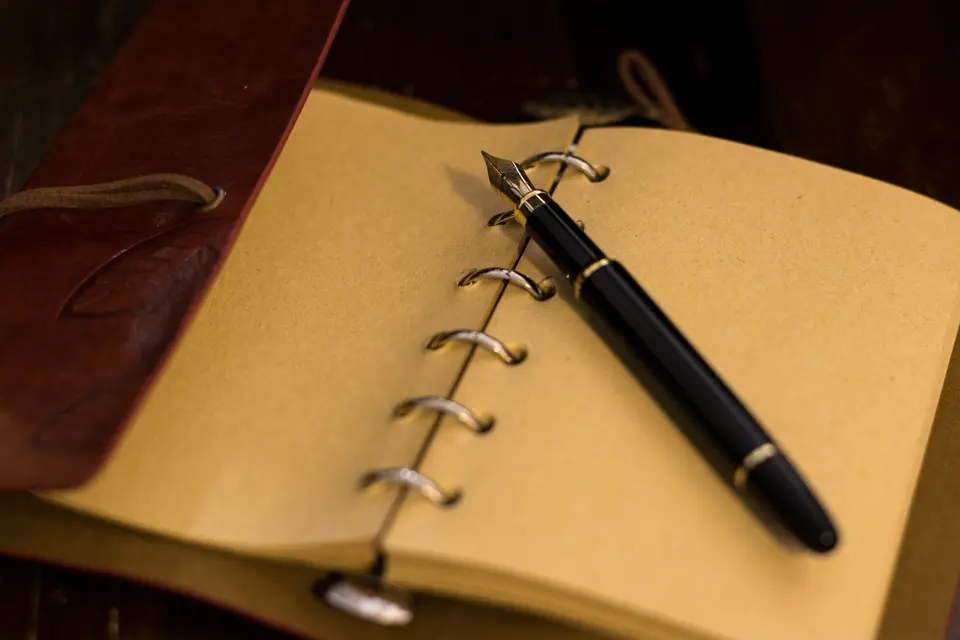
I have failed at journaling with expensive notebooks.
Several of them.
Beautiful covers. Nice paper. Serious pen. Full main-character setup.
Dead in three weeks.
Morning pages died.
Bullet journaling died.
Gratitude lists died after I wrote “coffee” and “sunlight” too many times and started feeling like I was lying to a worksheet.
The problem was not journaling.
The problem was trying to journal like a person I am not.
I do not need a daily ritual with candles.
I need a place to dump the truth when my brain is making soup.
The Method Is One Question
Here it is:
What’s actually happening?
That is the whole method.
When something feels stuck, I open a notebook and write that question.
Then I answer it badly.
Not beautifully.
Not wisely.
Not like a future memoir.
Badly. Honestly. In fragments if needed.
Examples:
- “I am not confused. I just do not want to send the email.”
- “I said yes because I wanted them to like me.”
- “This project is not hard. It is undefined.”
- “I keep avoiding the money part because I do not want to see the number.”
- “I am tired, not broken.”
That last one has saved me more times than any fancy prompt.
Why This Works
Most journaling systems ask you to maintain a habit.
This one asks you to use a tool.
Big difference.
You do not need to write every morning.
You do not need page numbers.
You do not need a mood tracker.
You do not need an elegant index that makes you feel like a monk with office supplies.
You need five honest minutes when the inside of your head gets too loud.
The move: Write the question at the top of a blank page.
Why: “What’s actually happening?” cuts through the story you are performing.
Do this now: Pick one current annoyance and answer the question in plain language.
No one is grading it.
No one is reading it.
Do not make it cute.
The Three-Line Version
If the blank page makes you dramatic, use three lines:
1. What happened?
The facts.
Not the courtroom speech.
2. What am I making it mean?
This is where the nonsense usually appears.
“They did not reply, so they hate the idea.”
“I missed two workouts, so I am back at zero.”
“This task feels hard, so I must be bad at it.”
Write the meaning down so it has to stand in daylight.
3. What is the next honest move?
Not the perfect move.
The next honest one.
Send the email.
Ask the question.
Take a walk.
Sleep.
Apologize.
Stop pretending you need more research.
That is journaling doing actual work.
Use It When You Are Stuck
This is not a daily obedience test.
Use it when:
- You keep replaying the same conversation.
- You are avoiding a small task with suspicious intensity.
- You feel “confused” but probably mean scared.
- You are about to restart a system again.
- You cannot tell whether you need action or rest.
That last one matters.
Half my overthinking is just tiredness wearing a blazer.
If the problem is too much noise, read the quiet power of doing less. If the problem is tiny choices piling up, the journal will show you where the pile starts.
Do Not Turn It Into Homework
Please do not ruin this by making it impressive.
No stickers required.
No color key.
No ten daily prompts.
No rule that you have to write every day or the whole thing “doesn’t count.”
That is how journaling becomes another little boss in your life.
The notebook should serve you.
Not the other way around.
If you write once this week and it helps you send one email, that counts.
If you write nothing for ten days because life is clear, also fine.
This is not a streak.
It is a drain.
Use it when the sink is full.
What To Write When You Feel Blank
Start with one of these:
- “The thing I keep avoiding is…”
- “The honest reason I am annoyed is…”
- “The decision I do not want to make is…”
- “The part I know but do not want to admit is…”
- “If I made this smaller, the next move would be…”
Then write for five minutes.
Stop when you hit the first useful sentence.
You do not need to dig until you find a childhood origin story. Sometimes the answer is “I need to eat lunch and send the document.”
Excellent.
Do that.
Keep the Notebook Ugly
Pretty notebooks are dangerous.
They make you perform.
Use any notebook you are willing to mess up.
Cross things out.
Write half sentences.
Make lists.
Contradict yourself.
Leave pages unfinished.
The more precious the notebook feels, the less honest you will be.
I learned the same thing when I stopped tracking every minute of my day. Some systems make you more aware. Some systems make you act like an unpaid intern for your own improvement project. Why I stopped tracking every minute is the same lesson in a different outfit.
The Point
The journaling method I stuck with is not romantic.
It is not especially deep.
It is one question:
What’s actually happening?
Ask it when you are stuck.
Answer it plainly.
Find the next honest move.
Close the notebook.
Then do the move.
That is the part people skip.
The page is not the point.
The clarity is.
Advertisement